
March 12, 2026
Dear Reader,
The WHO Immunization Agenda 2030 (IA2030) is often described as ambitious, which is a polite way of saying necessary, but inconvenient for budgets and politics. In high-income countries, vaccinology has entered a curious phase where the main constraint is no longer the antigens, but the arms. Measles, pertussis, HPV, adult vaccines in general: the epidemiology increasingly reads like a triumph of science sabotaged by a comment section. We keep inventing ever more sophisticated products, only to leave them stranded in warehouses, guidelines, and carefully worded “shared decision-making” pamphlets.In many low- and middle-income countries, the situation is almost the mirror image. There, willingness to vaccinate is often strong and the disease burden is high, yet health spending per capita would barely cover a streaming subscription. Under such conditions, even the most cost-effective vaccines must compete with syringes, salaries, fuel, and occasionally electricity.
To its credit, IA2030 attempts to address both realities at once: vaccines and vaccination — Vi and Va. We chose ViVa as the name for our newsletter because the two belong together. If we achieve Vi without Va, we waste science. If we push Va without thinking about Vi, we discard opportunities that science offers. “ViVa” is therefore not merely a slogan; it is a reminder that success will not be measured in press releases, but in quietly prevented deaths that never trend on social media.
This week’s issue reflects that tension between innovation and implementation. TBEV quietly reminds us that flaviviruses can also reach the heart, while our new series on AI in vaccinology explores whether algorithms might one day outpace antivaccine memes. Experiments in mice suggest that nonspecific immune stimulation may protect against a broad gallery of respiratory pathogens. Meanwhile, familiar adversaries such as diphtheria and avian influenza in Vietnam continue to resist retirement.
There are also encouraging signs. Early results from the excellent IMPRESS program at the German RKI demonstrate what serious implementation can achieve. New MERS findings from Africa remind us that coronaviruses, like bad ideas, travel well. For that reason, our infographic this week takes aim at persistent vaccine myths.
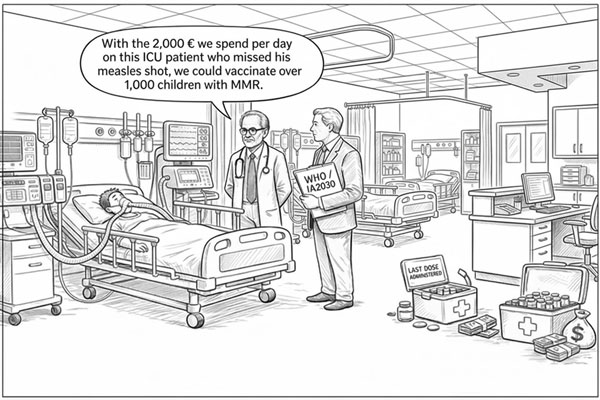
|
With all my best wishes, stay healthy—and receive the vaccine doses you need.
Warm regards,

Editor-in-Chief, Global Health Press
 |
Your go-to source for concise
updates on the latest developments in the world of vaccines. This week's VacciNEWS viewpoint: |
 |
Infographic of the weekVacciTUTOR is our CME-accredited online course dedicated to vaccines and vaccination. Developed by leading international researchers, the course offers over 60 comprehensive chapters covering fundamental topics such as microbiology and immunology, as well as detailed insights into vaccine-preventable diseases and their corresponding vaccines. Concise bullet-point summaries are available free of charge to support quick reference and learning. Feel free to download today’s Selected vaccine myths versus evidence infographic. » |

|
The TBE snapshotSnapshot week 11/2026: highlights a newly reported case, which highlights myocarditis associated with tick-borne encephalitis (TBE) virus infection, a rare but serious extra-neurological complication. The Snapshot of Week 11, 2026 explores clinical findings, diagnostic considerations, and what this case may mean for clinicians monitoring TBE patients beyond neurological symptoms. |
 |
Mucosal vaccination in mice shows protection against multiple respiratory threatsResearchers report that an intranasal vaccine approach in mice may provide broad protection against a range of respiratory pathogens, including viruses and bacteria. The findings suggest a potential pathway toward developing more universal vaccines targeting respiratory infections.
|
Be part of the Global Health Press Community - id-ea.org
Join our GHP community and access exclusive, subscriber-only articles, expert reviews, and in-depth features. By becoming a subscriber, you’ll stay ahead of the news with the latest vaccines and vaccination updates. Enjoy content designed specifically for our engaged audience.
We’re also excited to welcome contributors who share our passion for advancing the field of vaccines and vaccination,
public health and education. Whether it’s submitting an article, serving as a Country Editor, contributing research,
or hosting a webinar, there are many ways to get involved.
Become part of the conversation and strengthen global health together with us. Subscribe and join today!
Contact us at info@globalhealthpress.org to learn more.
| Let’s get the word out! : | |



 |
|
| Like what you read? Forward this email to your friends or colleagues. | |
| Invite your friends |
At Global Health Press Pte Ltd, we are committed to safeguarding your privacy.
Your contact details are never shared with third parties. If you no longer wish to receive updates from us, you can unsubscribe here.
Copyright © 2009-2026 Global Health Press Pte Ltd. Reg. No. 200921795N